China Top Photochromic Contacts Suppliers How to Choose?

Time:2026-09-14 Author:Isabella
0%

China has become an important sourcing market for specialty contact lenses, including Photochromic Contacts. Yet supplier selection requires more than comparing factory prices. These lenses interact directly with the eye, so optical performance, material safety, and manufacturing discipline deserve careful review. A polished website is not proof of reliable production.

Experienced buyers usually examine a supplier’s product specifications, quality system, and export history. Ask for clear data on lens material, water content, oxygen permeability, replacement schedules, and photochromic activation. Request samples from a normal production batch, not only demonstration pieces. Observe how quickly the lens changes under bright light and how evenly the tint fades indoors. Small differences can reveal process weaknesses.

Documentation matters. A credible manufacturer should explain its quality controls and provide relevant certificates, test reports, labeling details, and traceability records. Requirements may differ between China, Europe, North America, and other markets. Independent verification remains valuable. A certificate alone cannot guarantee comfort or consistent performance. That assumption can fail.

Communication also shows practical experience. Reliable suppliers answer technical questions directly, disclose limitations, and describe corrective actions when problems occur. Check whether packaging protects lenses from heat, moisture, and contamination during transport. Review minimum order quantities, lead times, customization terms, and after-sales support before signing anything. Medical professionals should confirm fitting and compliance requirements for the intended market. The best choice is not always the cheapest factory. It is the supplier that combines tested materials, stable production, transparent evidence, and dependable communication. Mistakes still happen, but honest systems make them easier to detect and correct.
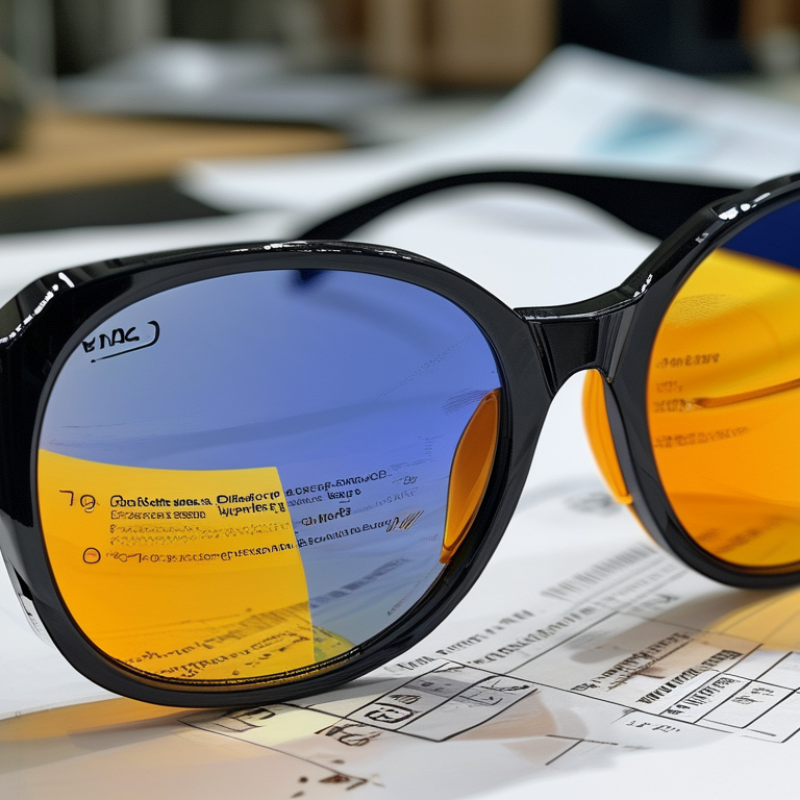
China Top Photochromic Contacts Suppliers How to Choose?

What Are Photochromic Contact Lenses and How Do They Work?

Photochromic contact lenses contain light-responsive molecules that react to ultraviolet radiation. When you step outdoors, these molecules darken and reduce the amount of light entering the eye. Indoors, they gradually become clearer again. The change is automatic, not controlled by a switch. However, the effect is not instant. Temperature, lens material, and light intensity can influence the fading time. Some lenses may also react weakly behind car windows because glass blocks much ultraviolet light.

Tips: Ask suppliers for independent test reports, material details, oxygen permeability, water content, and documented light-transmission results. Confirm whether the lenses are approved for your market and designed for daily wear. A dark sample does not prove safe performance. Comfort matters too. During fitting, check for dryness, blurred vision, redness, or movement when blinking. Stop wearing them if discomfort continues, and consult an eye-care professional.

Choosing a reliable supplier requires more than comparing prices. Request clear manufacturing records, prescription accuracy controls, storage instructions, and replacement guidance. The supplier should explain how the lenses perform in bright sunlight and low-light conditions. They should also state that photochromic lenses are not a complete substitute for protective sunglasses. This detail is easy to overlook. In my view, the technology is promising, but suppliers sometimes present it as more perfect than it is. Independent verification and professional fitting remain essential.

Key Standards for Evaluating Photochromic Contact Lens Suppliers

China Top Photochromic Contacts Suppliers: How to Choose?

When evaluating photochromic contact lens suppliers, begin with documented manufacturing experience. Ask how long they have produced tinted or light-responsive lenses. Request product specifications, material details, and batch records. A reliable supplier should explain oxygen transmission, water content, replacement schedules, and storage conditions clearly. Vague answers deserve caution.

Quality evidence matters more than attractive samples. Check whether the factory follows applicable medical-device quality systems, such as ISO 13485, and request current testing reports. Independent tests should cover material safety, optical performance, color consistency, and dimensional stability.

Photochromic performance also needs testing under different light intensities and temperatures. One bright-room demonstration proves very little. Certificates can expire.

Inspect the production process if possible. Look for clean rooms, calibrated equipment, trained technicians, and traceable lot numbers. Ask for samples from separate batches, then compare shade change, comfort, packaging, and lens geometry.

Suppliers should provide clear complaint handling and recall procedures. Communication is part of quality. Slow replies may become serious after delivery.

No supplier is perfect. I would record every promise in writing, because memory is a poor quality-control system. A small trial order can reveal defects before larger purchasing commitments. Supplier audits, transparent documentation, and consistent sample results offer stronger evidence than polished sales language.

How to Compare China’s Top Photochromic Contact Lens Manufacturers

Comparing China’s top photochromic contact lens manufacturers requires more than checking catalogues and quoted prices. Start with product evidence. Ask for measured activation time, fading time, optical power accuracy, oxygen transmissibility, water content, and UV filtration. Results should come from controlled tests, not attractive sales language. Request recent laboratory reports and compare testing methods, sample sizes, and acceptance limits. Small differences matter when lenses move from bright sunlight to indoor lighting.

A reliable manufacturer should explain its process clearly. Review material specifications, photochromic integration, sterilization controls, packaging integrity, and batch traceability. ISO 13485 certification can support quality management, but it does not replace product-specific verification. Ask to inspect the factory physically or through live video. Look for clean-room discipline, calibrated instruments, trained inspectors, and documented nonconformance handling. Request pilot samples from different batches. One perfect sample proves little.

Commercial comparison should include minimum order quantities, lead times, replacement policies, technical support, and export documents. Verify registration requirements in your destination market before ordering. Check prescription ranges and customization limits during negotiations. Independent testing deserves a place in the budget, especially when performance claims seem unusually strong. Polished presentations can hide weak documentation. Even careful comparisons may miss a production variation. Written corrective actions and repeatable batch data provide stronger evidence than promises.

What to Check in Product Quality, Safety, Customization, and Certification

Choosing China-based photochromic contact lens suppliers requires more than comparing prices. Ask for controlled production records and recent batch data. Examine sample lenses under magnification. The surface should look smooth, without bubbles, scratches, edge chips, or uneven tint. Check power accuracy, diameter, base curve, water content, oxygen transmissibility, and photochromic response. Test indoor clarity and outdoor darkening under repeatable light conditions. Response can change with temperature. Record that variable.

Safety evidence deserves careful attention. Request sterility records, biocompatibility testing, shelf-life studies, packaging validation, and lot traceability. Confirm the supplier’s quality system, trained inspectors, complaint process, and corrective-action records. Ask which certifications and market approvals apply to your destination. Verify certificates directly with the issuing body when possible. Certificates can mislead. Independent laboratory reports are stronger when report numbers match the exact lens and production lot.

Customization should be documented, not promised in a sales chat. Define prescription ranges, tint density, activation speed, UV filtering claims, packaging language, blister design, and minimum order quantities. Approve a pilot batch before large production. Measure several lenses from different boxes, not one perfect sample. Samples can deceive. Color consistency may drift between batches, a detail that is easy to miss. Keep written specifications, retained samples, and change-control notices. A responsive supplier explains limitations clearly and accepts technical questions.

China Top Photochromic Contacts Suppliers: How to Choose?

Product-quality, safety, customization, certification, and supplier-verification checklist
Evaluation Category Checkpoint Practical Benchmark or What to Check Required Evidence Suggested Score
1. Product Quality and Photochromic Performance
Product Quality Material and optical design Confirm the exact lens material, water content, oxygen-transmissibility data, power range, diameter, base curve, center thickness, and replacement schedule. These values must match the approved product specification and labeling. Technical data sheet, approved artwork, product specification, representative samples, and independent laboratory test reports. 0–5
Product Quality Photochromic activation Require measured activation under controlled UV and visible-light conditions. The report should state exposure wavelength or spectrum, irradiance, temperature, exposure time, and the change in visible transmittance or optical density. Photopic transmittance test, activation and fading curves, test method, raw data, and sample identification. 0–5
Product Quality Fading and recovery behavior Check whether the lens returns toward its original clear state within the supplier’s stated time after UV exposure. Compare repeated activation and fading cycles to identify performance drift. Time-series test results, cycle-aging data, acceptance limits, and lot-to-lot comparison. 0–5
Product Quality Optical accuracy Verify sphere, cylinder, axis, prism, diameter, base curve, and center thickness against the approved tolerance. Optical power should be tested using an applicable contact-lens measurement method. Certificate of analysis, batch inspection records, calibrated equipment records, and third-party verification. 0–5
Product Quality Physical defects and cosmetic quality Inspect lenses for tears, edge chips, bubbles, inclusions, foreign particles, surface deposits, color irregularity, deformation, and packaging damage. Use documented visual-inspection criteria rather than subjective approval only. Visual inspection standard, defect classification, sampling plan, inspection images, and retained-sample procedure. 0–5
Product Quality Dimensional stability and shelf life Confirm that diameter, base curve, water content, optical power, package seal, and photochromic performance remain within specification throughout the stated shelf life. Real-time and accelerated stability protocols, stability reports, expiry-date rationale, and storage-condition statement. 0–5
2. Safety and Biocompatibility
Safety Biocompatibility assessment Assess the finished lens and relevant extractables according to a risk-based biological evaluation. The evaluation should consider irritation, sensitization, cytotoxicity, and other endpoints relevant to prolonged eye contact. Biological evaluation report, applicable ISO 10993 test reports, toxicological assessment, and material declarations. 0–5
Safety Microbiological control and sterility For sterile packaged lenses, verify the validated sterilization process, sterility assurance approach, package integrity, and post-sterilization product performance. The process must be controlled by lot. Sterilization validation, sterility test records, bioburden monitoring, package-integrity testing, and lot-release records. 0–5
Safety Preservatives and packaging solution Review all solution ingredients, preservatives, pH, osmolality, container materials, and extractables or leachables. The solution must be compatible with the lens material and intended wearing schedule. Full ingredient declaration, safety data, compatibility studies, pH and osmolality records, and packaging-material assessment. 0–5
Safety User instructions and contraindications Instructions should clearly cover insertion, removal, cleaning, replacement, storage, maximum wearing time, warning signs, contraindications, and the need for professional fitting or eye-care advice. Instructions for use, package insert, warning statements, multilingual labels, and regulatory review record. 0–5
3. Customization and Manufacturing Capability
Customization Prescription and parameter range Confirm available powers, cylinder and axis options, diameter, base curve, center thickness, tint design, replacement cycle, and minimum order quantity. Ask whether custom parameters require a new design verification. Current parameter matrix, customization policy, minimum order quantity, development timeline, and sample approval process. 0–5
Customization Tint uniformity and appearance For cosmetic or tinted designs, evaluate color coordinates, pupil-zone clarity, print alignment, edge definition, repeatability, and appearance under daylight and indoor lighting. Acceptance criteria should be measurable. Color specification, approved master sample, color-measurement records, design drawings, and batch comparison data. 0–5
Customization Private-label packaging Check whether packaging can include required legal manufacturer information, lot number, expiry date, storage conditions, power, base curve, diameter, sterilization status, and regulatory symbols for the target market. Packaging templates, label-control procedure, artwork approval workflow, barcode options, and packaging validation. 0–5
Customization Change control and traceability The supplier should formally control changes to material, pigment, solution, mold, process, packaging, and critical suppliers. Each finished lot should be traceable to raw materials and production records. Change-control procedure, device history record, raw-material traceability, complaint records, and recall procedure. 0–5
4. Certification and Regulatory Readiness
Certification Quality management system Prefer a current ISO 13485 certificate covering the relevant medical-device activities and manufacturing site. Verify the certificate scope, issuing body, validity, and site address. Current ISO 13485 certificate, audit status, certificate scope, site details, and corrective-action history where available. 0–5
Certification Product-specific market authorization Confirm that the exact lens model, material, tint, power range, packaging configuration, and intended use are covered for the destination market. A factory certificate alone does not prove product authorization. Applicable registration, conformity-assessment documents, declaration of conformity, technical documentation index, and authorized-representative details where required. 0–5
Certification Applicable standards Ask for documented conformity with applicable contact-lens requirements, including ISO 18369 where relevant, and a risk-based biological evaluation using applicable ISO 10993 principles. Standards compliance matrix, test protocols, laboratory accreditation details, and technical file references. 0–5
Certification Destination-market compliance Requirements differ by market. Before purchase, define whether the product will be sold in China, the European Union, the United States, the United Kingdom, or another jurisdiction, then verify the corresponding registration and labeling pathway. Regulatory gap assessment, market-specific label review, registration strategy, and import or distribution documentation. 0–5
5. Supplier Audit and Commercial Reliability
Supplier Reliability Factory ownership and production location Confirm whether the supplier is the actual manufacturer, an authorized trading company, or both. The manufacturing address on certificates, audit reports, labels, and invoices should be consistent. Business license, manufacturing-site information, authorization letter, factory audit, and certificate-address comparison. 0–5
Supplier Reliability Quality-control resources Evaluate cleanroom controls, environmental monitoring, incoming inspection, in-process inspection, final release testing, equipment calibration, training, and nonconformance handling. Factory-audit checklist, cleanroom qualification, calibration certificates, inspection procedures, training records, and CAPA examples. 0–5
Supplier Reliability Sampling and pilot-order policy Request production-representative samples rather than development-only samples. Approve a golden sample and define acceptance criteria before mass production. Sample request record, pilot-order terms, approved sample, inspection checklist, and mass-production approval form. 0–5
Supplier Reliability Complaint, recall, and after-sales response The supplier should have documented complaint intake, investigation, adverse-event escalation, product recall, and corrective-action processes. Response responsibilities should be stated in the contract. Complaint procedure, recall procedure, response-time commitment, CAPA process, and quality agreement. 0–5
Supplier Reliability Supply continuity and delivery control Review production capacity, lead time, raw-material availability, safety-stock policy, expiry-date management, shipping conditions, and contingency planning for shortages or equipment failure. Capacity statement, production schedule, business-continuity plan, lead-time history, and shipping-condition requirements. 0–5
6. Recommended Decision Framework
Final Review Minimum qualification rule Do not approve a supplier based on price alone. Require satisfactory evidence for product safety, sterile-packaging control, product-specific regulatory coverage, and lot traceability before commercial comparison. Completed supplier questionnaire, technical review, factory audit, sample evaluation, and regulatory document checklist. Pass / Fail
Final Review Weighted scoring model Suggested weighting: Product Quality 30%, Safety 25%, Certification 20%, Customization 15%, Supplier Reliability 10%. Set a minimum total score and treat safety or regulatory failures as automatic disqualifiers. Completed scorecard, risk register, approval committee record, and documented corrective-action plan. 0–100
Final Review Contract quality requirements Include approved specifications, acceptance limits, testing responsibilities, lot-release documents, change notification, audit rights, complaint handling, recall cooperation, confidentiality, and liability provisions. Quality agreement, supply contract, technical annex, approved specification, and change-notification clause. Pass / Fail
Important: Photochromic performance limits, optical tolerances, sterility requirements, labeling rules, and market authorization requirements must be confirmed for the specific lens design and destination market. Supplier certificates should be checked for validity, scope, issuing organization, manufacturing site, and exact product coverage.

How to Select the Right Supplier for Your Business Needs

Selecting the right Chinese photochromic contact lens supplier requires more than comparing prices. Start with evidence. Ask for product specifications, material details, manufacturing records, and current certificates for your target market. A reliable supplier should explain how the lens changes shade, how quickly it responds, and how performance varies under indoor and outdoor light. Do not accept vague claims such as “premium quality.”

Request samples from the same production batch. Check packaging, labeling, moisture retention, comfort, color consistency, and optical measurements. Independent laboratory testing is valuable, especially for oxygen transmission, sterility, surface quality, and UV-related claims. Confirm that the supplier follows recognized quality systems and can provide traceability from raw materials to finished products. Small details matter.

Communication also reveals operational strength. Ask about minimum order quantities, lead times, replacement procedures, customization limits, and storage conditions. A capable team should answer technical questions clearly, not only send a sales quotation. Review export experience carefully, but verify every document yourself. A low price may hide weak inspection controls or unstable supply. My own first screening would still be incomplete without a pilot order. Even a promising sample can change during mass production, so define acceptance standards before signing any agreement.

FAQS

What are photochromic contact lenses?

They contain light-responsive molecules that darken under ultraviolet radiation. Indoors, they gradually become clearer again.

How quickly do these lenses change shade?

The change is automatic, but not instant. Temperature, lens material, and light intensity affect the timing.

Do photochromic lenses work inside a car?

Their effect may be weaker behind car windows. Glass blocks much ultraviolet radiation, so darkening can be limited.

Can these lenses replace protective sunglasses?

No. They are not a complete substitute for protective sunglasses, especially in strong sunlight.

What should I request from a supplier?

Request material details, oxygen permeability, water content, test reports, certificates, and light-transmission results.

How can I evaluate product samples?

Request samples from one production batch. Check packaging, labeling, moisture retention, color consistency, and optical measurements.

What comfort problems should fitting reveal?

Watch for dryness, blurred vision, redness, or movement during blinking. Stop wearing them if discomfort continues.

Why is a pilot order important?

A sample may not represent mass production. Define acceptance standards first. My first review could still be incomplete.

What supplier questions reveal operational strength?

Ask about minimum orders, lead times, storage conditions, replacements, customization limits, and traceability records.

Does a low price indicate better value?

Not necessarily. It may hide weak inspection controls or unstable supply. Verify documents independently.

Conclusion

Photochromic Contacts are designed to adjust their tint in response to changing light conditions, helping users manage brightness more comfortably while maintaining clear vision indoors. When selecting a supplier in China, businesses should first understand the product’s operating principle and then evaluate manufacturers through consistent criteria, including material quality, optical performance, comfort, production capacity, quality control, and communication reliability.

A responsible supplier should provide clear product specifications, safety documentation, testing records, and applicable certifications for the intended market. Buyers should also review customization options such as lens parameters, packaging, labeling, and order volume flexibility. Comparing several manufacturers through samples, factory assessments, transparent quotations, and delivery terms can help identify the best fit. Ultimately, the right Photochromic Contacts supplier should combine dependable product quality, strict safety management, practical customization, responsive service, and the ability to support long-term business growth.

Isabella

Isabella

Isabella is a dedicated marketing professional with a sharp focus on driving brand growth and engagement through strategic content creation. With an extensive background in digital marketing, she combines her passion for storytelling with her keen understanding of industry trends to deliver......